For me, though, those three ideas sometimes fall flat when you need to make a lot of things up front. Don't get me wrong, they’re great pieces of advice (if I do say so myself 🥴) but they operate from the mindset of delivering information to your players.
What if the person who needs information is you? Well, five tips then:
Worldbuild Negatively
The 80/20 Rule
Obsess (A Little!)
Write From Inside the House
Create a Mystery (or Lie)
No, I don’t mean start worldbuilding while you’re in a bad mood.
What I mean is, start your worldbuilding by deciding what isn’t there. What thing used to exist, but was taken away? What never existed here in the first place? What took the missing thing’s place?
This negative space invokes what every writer wants: curiosity from the reader. And where there’s curiosity, there’s creativity.
A few examples:
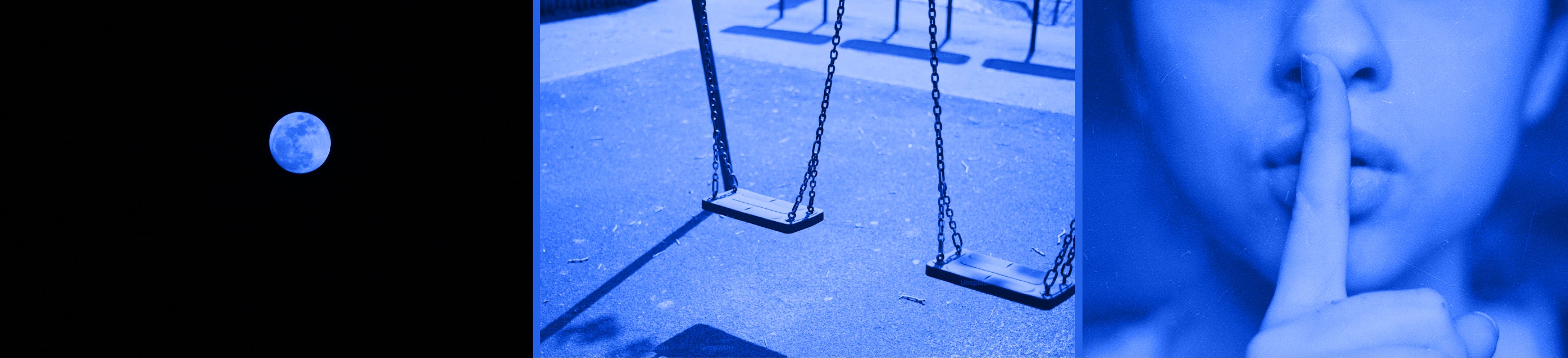
No Stars. The night sky is empty—not dark with clouds, but genuinely a pitch-dark void. Astronomers don’t study the stars, instead they look into the blackness and attempt to ascertain meaning. People navigate by memorized routes and lantern chains strung between settlements. Lantern-lighters are a dangerous and honored trade.
No Children. The youngest person in the known world is 43. Births stopped two generations ago for reasons nobody can agree on. Apprenticeship has become a sort of adoption, the economy has restructured completely around inheritance, and the preservation of knowledge becomes almost moot.
No Spoken Language. Everyone communicates through sign, gesture, or the written word. Sound exists—in nature mostly—but human voices are silent. “Speakers” from the far northern woods are treated with fear in most circles, though some believe their ways can be learned—by force if necessary.
Building off the previous tool, the 80/20 Rule(also known as the Pareto Principle if you’re a mega-nerd or business-type) boils down to 80% of the consequences come from 20% of the causes.
Put another way, only a small number of decisions yield the vast majority of results.
One could think of this as “do less, reap more”—which is true—but in our circumstances, we’re going to think of it as a singular big decision when worldbuilding can do a lot more heavy lifting than ten small decisions.
A few examples:
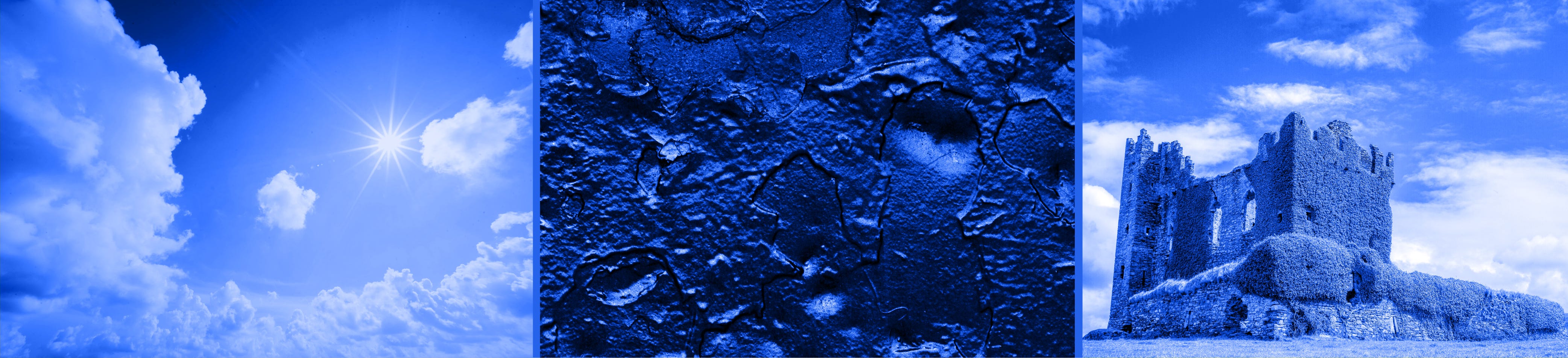
The sun doesn’t set. From this single fact we get: no nocturnal predators, crops grow constantly, sleep is a social construct rather than a natural one, dark places evoke much more fear as they’re rarer, and much more.
Iron is deathly radioactive. Weapons and armor are non-ferrous, often laquered wood, boiled leather, or more pliable metals. Advanced surgery would be functionally impossible. Some individuals are immune to iron’s effects and are treated as pariahs, or worse, weapons.
The empire collapsed forty years ago. Everyone over middle-age remembers the old ways. Roads exist but are nearly all in disrepair. Three generations of soldiers were trained on tactics no longer applicable to a modern battlefield. Splintering dialects of a shared language begin to crop up. Every leader is either a former imperial official or someone who killed one.
Where writers and designers can get carried away is trying to treat everything in the world as though it’s sacred. That may be true in our world, but remember that there are billions of people making that happen.
In your world, you have at best yourself and a handful of others. So it’s best to focus on a niche and drill down as far as you can. As you do, you’ll find no world out there that’s quite like yours.
What to focus on? Maybe it’s the currency. Or the way doors are carved and built. Or the breadth of flora and fauna. Whatever it is, pick something as your guilty indulgence and go crazy. And then if you feel like you’ve gone as far as you can, remember, this is for you—not necessarily everyone else; don’t be offended if people skip your over-indulgence.
A few examples:
Knots. Knotwork is the highest art form there is. Twelve base knots, how they combine, how color matters, etc. The way the merchant’s sash is tied represents their financial ledger. Bracelets between lovers are heartfelt poems. Dangerous individuals wear obscene knots unfit for polite society.
Tea. Hard to imagine, right? Hardly—tea once held the most important trade on the global market. People died for it. Revolutions began with it. In your world, maybe there are six regional varities of teas that all have their own inherent properties. Perhaps there’s an entire dialect delivered through the art of serving tea.
Masks. Everyone wears a mask past puberty. Each decade of one’s life is a different material—easy to gauge someone’s age at a glance (that is, if they’re telling the truth). Mask designs signify occupation, inheritance customs, and societal laws. To be a mask-maker is to be someone important, someone lauded.
One of the traps of worldbuilding is writing everything like it’s something you could look up on Wikipedia. Everything in their neat little containers, every possible permutation catalogued and accounted for.
An exciting world to explore is one where information is given via the world itself—not through lore dumps or a wiki folks will never read. Things like billboards, religious sermons, shipping manifests, and more do so much more for you than a clinical observation of the known world from the viewpoint of an omnipresent narrator.
A few examples:
A Want Ad: “EXPERIENCED THRESHOLD-WALKER NEEDED. Must provide own salt. Compensation: 8 hours of stored sunlight per crossing, plus salvage rights to anything you carry back from the Edge. Widows and debtors preferred. Inquire more at the Fourth Bell” That single ad implies a magic system, an economy, and a social underclass.
A Warning Sign: “BY ORDER OF THE CANAL AUTHORITY: Do NOT feed the water. Do NOT answer the water. If the water speaks your name, report the incident to the nearest registrar before sundown. Make note of the street names when making a report.” Weird water, an authority who manages it, and an entire bureaucracy around avoiding it.
A Children’s Rhyme: “One for the soldier, two for the thief, three for the king who brought us grief, four for the fire, five for the flood, six for the year we paid in blood”. History plays out in a half-remembered song that even children sing. Nobody really remembers what any of it means—but its pervasive enough that all kids know it. Even children from outside the city.
Keeping up with the theme of something missing, the final tip is to create something that isn’t missing per se—but is being deliberately held back from public knowledge, for better or worse.
This may be an innocent enough mystery—the reason we have two suns, the reason the grass grows in purple-silver hues, etc. It may, however, be something more nefarious like a cover-up or deliberate obfuscation of the way things are supposed to be.
A few examples:
Greentide: Every seventh night, the northern coast’s tide glows faintly green. Fisherfolk time their nets by it. Scientists have theories, but none quite fit. It’s been happening for as long as anyone can remember and doesn’t seem to have any ill-effects. It’s just a part of the unexplained nature of things.
Replacement: Everyone knows the Duke’s son died in the hunting accident twelve years ago. The Duke was beside himself, until he was visited by a living man calling himself his son. Overjoyed, the Duke took him in. He looks nothing like the old portraits—not even a passing resemblance. Nobody says anything about it. Folks on the street tell those looking into the matter to “concern themselves elsewhere” and that “trouble follows those digging into things they shouldn’t”. By the sounds of it, the whole town is complicit in the switch.
Old World: The Church of Aera teaches that the Scouring was divine punishment—fire from heaven, the wicked consumed, all driven underground. But older cathedrals have basements full of broken machinery—some with shattered wings. Even stranger, the word for “angel” shares a root with the ancient term for “pilot”. No wonder the Church forbids anyone from entering these ancient places—the punishment for which can be most severe.
What do you think?
With all these in mind, what kinds of worlds are you thinking of? Do you have any changes you’d make to worlds you’ve already worked on? I’d love to hear about it in the comments!
What I like about these tools is that you don’t have to start from scratch to make them work—but they do function if you’re coming at it from that angle. Not only that, but the incorporate my two favorite pastimes: lying and making up imaginary bullshit.
No wonder I keep writing about it!
Thanks for reading. 🟦
This article is brought to you by the following paid subscribers who make this newsletter possible:
Omg! I have gone back and read your whole article now that I am done (not really) fizzing about worldbuild negatively. These tips are fire! 🔥
In particular, showing the world through in-game paraphernalia reminds me of Cyberpunk RED. I think that game delivered on that spectacularly. Must. Use. (I love making props!)
- signed avid solo player
P.S. I am new to the TTRPG scene (started playing solo in September and in groups in October), so I apologise sincerely if my comments are out of whack









Omg! I have gone back and read your whole article now that I am done (not really) fizzing about worldbuild negatively. These tips are fire! 🔥
In particular, showing the world through in-game paraphernalia reminds me of Cyberpunk RED. I think that game delivered on that spectacularly. Must. Use. (I love making props!)
- signed avid solo player
P.S. I am new to the TTRPG scene (started playing solo in September and in groups in October), so I apologise sincerely if my comments are out of whack
I love everything mentioned here and am so thankful for the examples!